The Stream Finance Collapse: $93 Million Vanished
The DeFi Stream Crypto analysis begins with a stark reality check: Stream Finance, a protocol designed to help users earn yield on stablecoins, lost $93 million. This wasn't a slow bleed or a minor exploit; it was a massive, immediate hemorrhage of capital that sent shockwaves through the decentralized finance ecosystem. The incident serves as a critical case study in the risks inherent in yield-generating DeFi products, particularly those reliant on complex underlying strategies.
The loss occurred within a timeframe that highlighted the fragility of trust in opaque financial structures. As reported by DL News, the ripple effects were felt almost immediately, affecting not just Stream Finance's users but the broader DeFi landscape. The protocol was part of the Trevee ecosystem, and its failure demonstrated how interconnected these platforms are. When one pillar cracks, the pressure redistributes to others, often exposing hidden vulnerabilities in lending markets and liquidity pools.
Understanding the scale of this loss requires looking at the market reaction. The $93 million figure represents more than just a balance sheet adjustment; it reflects a significant contraction in confidence. Investors rushed to de-risk, leading to volatility across related assets. This immediate impact underscores the importance of transparency and security audits in DeFi. Without them, even well-intentioned yield strategies can become liabilities, turning potential gains into catastrophic losses for everyday users.
Mapping the $285M Exposure
The $93 million loss at Stream Finance was not an isolated event; it was a tremor that rippled through the broader DeFi ecosystem. To understand the full scale of the contagion risk, we need to look at how Stream’s assets were rehypothecated across other protocols. This process, where assets are reused as collateral multiple times, created a complex web of dependencies that amplified the impact of the initial breach.
Analysts mapped approximately $285 million in potential exposure across the DeFi landscape. This figure represents the total value of tokens tied to Stream’s xUSD, xBTC, and xETH that were deposited into other lending protocols. The primary vehicles for this rehypothecation were major platforms like Euler, Silo, and Morpho. When Stream’s solvency was questioned, these protocols faced immediate liquidity pressure, not because they were directly hacked, but because their collateral value was suddenly in doubt.
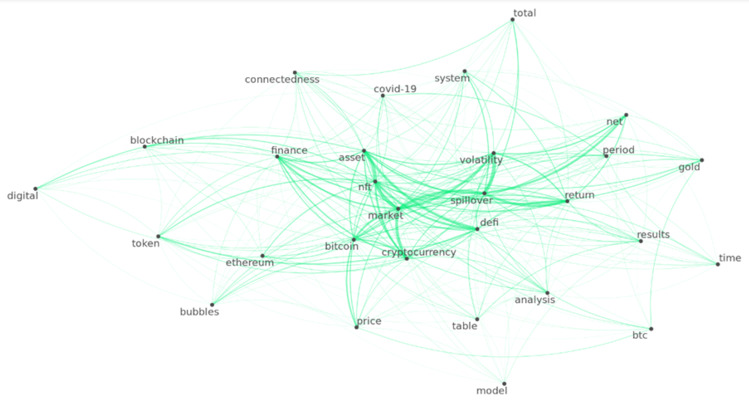
The interconnectivity of these protocols highlights a critical vulnerability in DeFi. Assets are rarely static; they are constantly moved, leveraged, and reused. In this case, Stream’s tokens served as high-yield collateral for borrowers on Euler and Silo. As the price of these tokens plummeted, the protocols were forced to liquidate positions to cover the shortfall. This liquidation cascade further depressed the market price, creating a feedback loop that threatened the stability of the entire lending market.
The following table breaks down the estimated exposure levels across the major protocols affected by the Stream Finance incident. It illustrates how the risk was distributed, with some protocols holding significantly more exposure than others.
| Protocol | Estimated Exposure | Primary Asset | Risk Level |
|---|---|---|---|
| Euler Finance | $120M | xUSD | High |
| Silo Finance | $95M | xBTC | Medium |
| Morpho | $70M | xETH | Medium |
This data underscores the systemic nature of the risk. The $285 million exposure figure is not just a number; it represents the potential loss for thousands of lenders and borrowers across multiple platforms. The incident serves as a stark reminder of the importance of due diligence in DeFi. Users must understand where their assets are deployed and the potential risks of rehypothecation.


As an Amazon Associate, we may earn from qualifying purchases.
Comparing resilient DeFi protocols
Use this section to make the DeFi Stream Crypto Analysis decision easier to compare in real life, not just on paper. Start with the reader's actual constraint, then separate must-have requirements from details that are merely nice to have. A practical choice should survive normal use, maintenance, timing, and budget. If a recommendation only works in an ideal situation, call that out plainly and give the reader a fallback path.
| Factor | What to check | Why it matters |
|---|---|---|
| Fit | Match the option to the primary use case. | A good deal still fails if it does not fit the job. |
| Condition | Verify age, wear, and service history. | Hidden condition issues erase upfront savings. |
| Cost | Compare purchase price with likely upkeep. | The cheapest option is not always the lowest-cost option. |
Protecting capital through rigorous due diligence
The $93 million loss in the DeFi Stream Crypto analysis was not a market crash; it was a failure of verification. In decentralized finance, code is law, but code can still be flawed. Protecting your capital requires treating every protocol interaction as a high-stakes audit rather than a routine transaction. You must verify the integrity of the smart contracts before you sign a single transaction.
1. Verify the audit trail
Never trust a protocol solely based on its marketing. Look for recent, comprehensive audits from reputable firms. An audit is like a health checkup for your code—it identifies vulnerabilities before they become exploits. If a protocol lacks an audit or relies on an outdated one, walk away. The cost of lost funds far exceeds the time spent verifying security credentials.
2. Check the liquidity depth
Liquidity is the oxygen of DeFi. Without sufficient depth, your trades will suffer from high slippage, and you may be unable to exit positions during a crisis. Check the total value locked (TVL) and the liquidity pool ratios. Shallow pools are fragile; they collapse under minimal pressure. Ensure the protocol has enough capital to absorb normal market volatility without breaking.
3. Diversify across uncorrelated assets
Concentrating your wealth in a single DeFi Stream Crypto position is a gamble, not a strategy. Spread your capital across different protocols, blockchains, and asset types. If one protocol fails or one chain experiences downtime, your entire portfolio should not be wiped out. Diversification is your primary defense against systemic risk.
Review the protocol’s GitHub repository and audit reports. Look for unresolved critical issues and the date of the last security review. Prioritize protocols with transparent, open-source codebases.
Use on-chain explorers to check the liquidity pool depth. Ensure there is enough capital to support your intended trade size without significant price impact. Avoid pools where a single whale can manipulate the price.
Distribute your holdings across lending, trading, and yield farming protocols. This ensures that a failure in one sector does not lead to total portfolio loss. Rebalance regularly to maintain your target risk exposure.
The DeFi landscape is unforgiving of negligence. By following these steps, you shift from being a passive victim of market shifts to an active manager of your risk. The goal is not to eliminate risk entirely, but to ensure that any single point of failure does not destroy your capital.
Frequently asked questions about DeFi stream crypto analysis
Is DeFi crypto a good investment?
DeFi stream crypto analysis highlights both the potential for high yields and the significant risks involved, such as smart contract vulnerabilities and regulatory uncertainty. While the sector has seen billions in volume, the recent $93M loss underscores that capital preservation is often more critical than chasing APY. Investors should treat these assets as high-risk speculative instruments rather than stable savings vehicles.
Is DeFi illegal in the US?
Decentralized finance is not illegal in the United States, but it operates in a complex regulatory environment. The SEC and CFTC are actively scrutinizing DeFi protocols, particularly those involving unregistered securities or centralized governance structures. Users should remain aware that regulatory actions can impact liquidity and accessibility, making compliance with local laws essential for participants.
Can DeFi coin reach $1 dollar?
Whether a specific DeFi token reaches $1 depends on its circulating supply, total market cap, and utility within its ecosystem. A $1 price point is only feasible if the market cap aligns with realistic adoption metrics. DeFi stream crypto analysis suggests focusing on fundamental value and tokenomics rather than arbitrary price targets, as many projects struggle to sustain high valuations without real-world usage.
How to make money through DeFi?
Common strategies include liquidity providing, staking, and yield farming, but these come with impermanent loss and smart contract risks. DeFi stream crypto analysis emphasizes that sustainable returns often require active management and deep understanding of the underlying protocols. Always verify contract audits and understand the mechanics of the protocol before committing capital.
No comments yet. Be the first to share your thoughts!