The xUSD depeg event timeline
The collapse of Stream Finance didn't begin with a hack, but with a valuation error that spiraled out of control. On November 3, 2025, the protocol reported an unexpected loss of approximately $93 million. This wasn't a simple accounting glitch; it was the result of complex exposure to other DeFi positions that had suddenly turned toxic. Within hours, the market realized that the collateral backing xUSD was far less liquid than advertised.
The immediate reaction was a panic-driven sell-off. xUSD, which had maintained its peg to the US dollar for months, began to decouple rapidly. By the end of the first day, the stablecoin had lost over 73% of its value, dropping to roughly $0.27. This wasn't just a price dip; it was a structural failure. Stream Finance was forced to freeze redemptions, effectively locking user funds and signaling that the protocol could no longer honor its promise of 1:1 parity.
This freeze turned a market correction into a crisis. Users who had relied on xUSD for yield farming or as a stable store of value suddenly found their positions stranded. The loss of confidence spread instantly through the DeFi ecosystem, as other protocols holding xUSD as collateral were forced to liquidate positions to cover their own debts. The $93 million loss was just the opening move in a chain reaction that would eventually wipe out $285 million in total exposure.
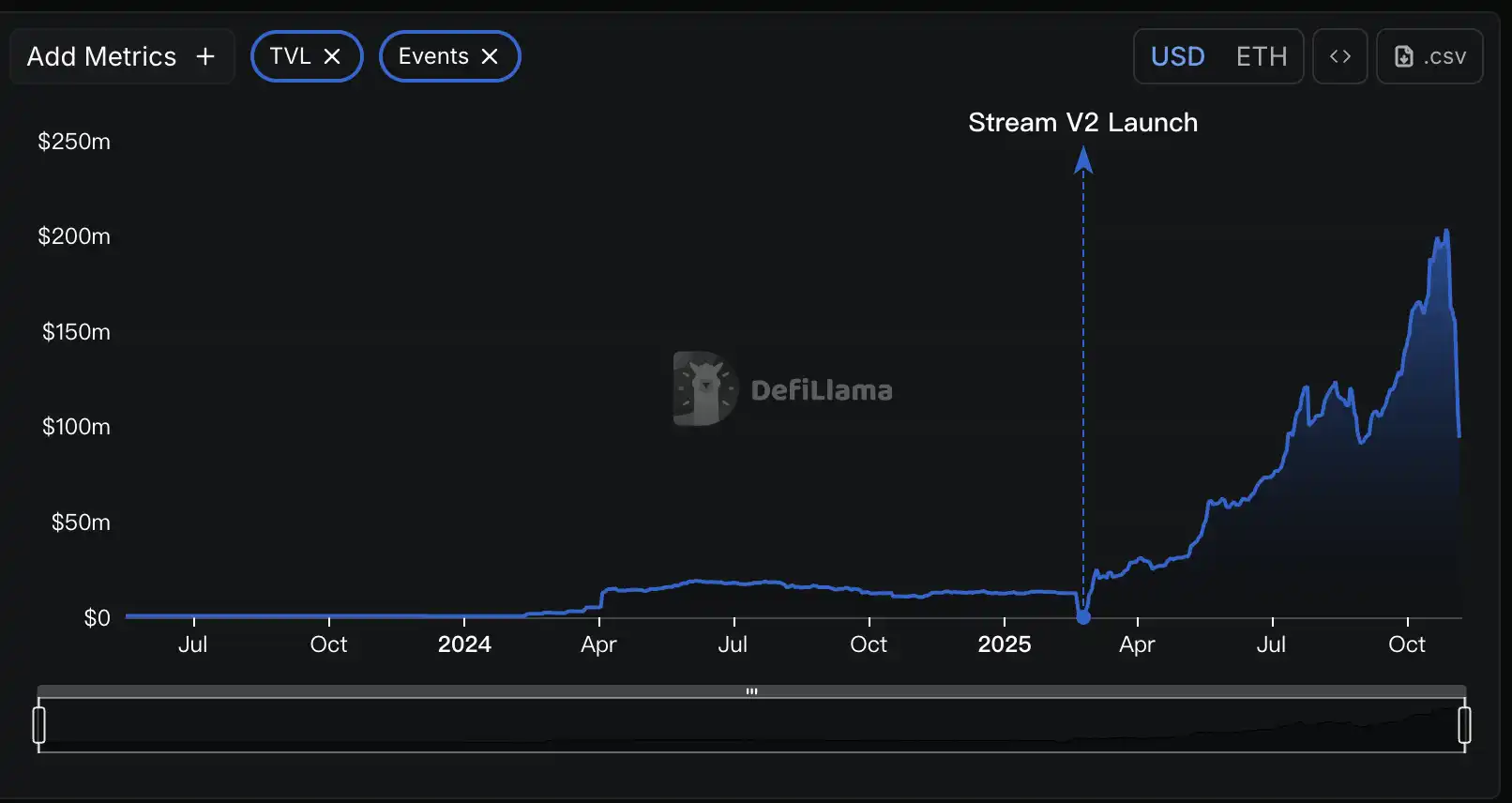
The speed of the depeg highlights the fragility of modern DeFi composability. When one piece of the stack fails, the interconnected nature of these protocols accelerates the damage rather than containing it. The xUSD chart below illustrates the severity of the break from its peg, showing the sharp vertical drop that marked the end of Stream Finance's stability.
The aftermath of this event forced a reevaluation of how stablecoins are backed in DeFi. The reliance on opaque collateral pools and the lack of real-time transparency in exposure calculations proved to be fatal flaws. As the dust settled, the industry was left to grapple with the question of how to prevent such a contagion from happening again, especially as more capital flows into these interconnected systems.
How $93M Became a $285M Contagion
Stream Finance’s collapse wasn’t just a bad trade; it was a mechanical failure of leverage. The protocol reported a loss of around $93 million and froze redemptions of its stablecoin, xUSD, triggering a severe devaluation that erased over 73% of its value in a single day (S&P Global). But the damage didn’t stop at Stream’s doors. Because DeFi is built on composability—where protocols lend to and borrow from one another—this internal loss cascaded rapidly across the ecosystem.
Think of DeFi composability like a house of cards. When one card falls, it doesn’t just knock over its neighbor; it triggers a chain reaction that brings down the entire structure. Stream’s high-leverage yield strategy meant it was deeply entangled with other lending protocols. When Stream’s assets lost value, those lenders faced immediate margin calls and potential insolvency, turning a single protocol failure into a systemic risk event.
The contagion vector was recursive leverage. Stream didn’t just lose money; it borrowed against its own assets to amplify returns. When those assets depreciated, the borrowed capital had to be liquidated. This liquidation pressure hit other protocols that had lent to Stream or held similar assets, forcing them to sell off their own holdings. This fire-sale dynamic drove prices down further, triggering more liquidations in a vicious cycle.
To understand the scale, compare the initial loss to the total ecosystem exposure:
| Metric | Value |
|---|---|
| Initial Protocol Loss | $93 Million |
| Total Ecosystem Exposure | $285 Million |
| xUSD Devaluation | >73% |
| Primary Vector | Recursive Leverage |
This analysis of DeFi Stream Crypto highlights how interconnectedness can amplify risk. A $93 million hole in one protocol became a $285 million crisis because the safety nets were woven into the same fabric as the risk. For investors, this underscores the importance of looking beyond a single protocol’s balance sheet to understand its place in the broader DeFi web.
Who Held the Bag: Protocol Exposure and Counterparty Risk
The $93 million loss at Stream Finance was just the initial shockwave. Because DeFi is built on composability—where protocols are stacked like financial LEGOs—the collapse quickly cascaded into a $285 million contagion. This wasn't just about Stream; it was about how deeply xUSD and the STREAM token were woven into the liquidity moats of other major platforms.
When xUSD devalued by over 73% on its first day, it didn't just vanish. It sat in the balance sheets of lending protocols, liquidity pools, and yield aggregators. The interconnected nature of DeFi means that when one pillar cracks, the weight shifts to its neighbors. If those neighbors are over-leveraged on the same toxic asset, they crack too. This is the "DeFi Stream Crypto analysis" reality: liquidity is only as safe as its most exposed counterparty.
The following table breaks down the primary vectors of exposure, highlighting how different protocols absorbed the shock. Note that these figures represent estimated exposure levels at the peak of the contagion, illustrating the scale of the ripple effect.
| Protocol | Exposure Type | Estimated Impact | Status |
|---|---|---|---|
| Aave | xUSD Collateral | High | Paused Borrowing |
| Curve Finance | xUSD Liquidity Pool | Medium | Paused Withdrawals |
| MakerDAO | xUSD Debt Position | Low | Monitoring |
| Uniswap V3 | xUSD/USDC Pool | Medium | Price Dislocation |
The data above reveals a critical vulnerability: even protocols with low direct exposure can suffer from price dislocation and liquidity freezes. When Curve paused withdrawals, it wasn't because it was insolvent, but because the xUSD pool could no longer price its assets accurately. This forced users to hold illiquid, devalued tokens, effectively trapping capital that could have been deployed elsewhere in the ecosystem.
For investors tracking the DeFi Stream Crypto analysis, the lesson is clear. The health of a stablecoin issuer is no longer an isolated metric. It is a systemic risk factor. When Stream Finance faltered, it exposed the hidden leverage in lending markets and the fragility of stablecoin pegs in decentralized exchanges. The $285 million figure isn't just a loss; it's a map of where the risk was hiding.
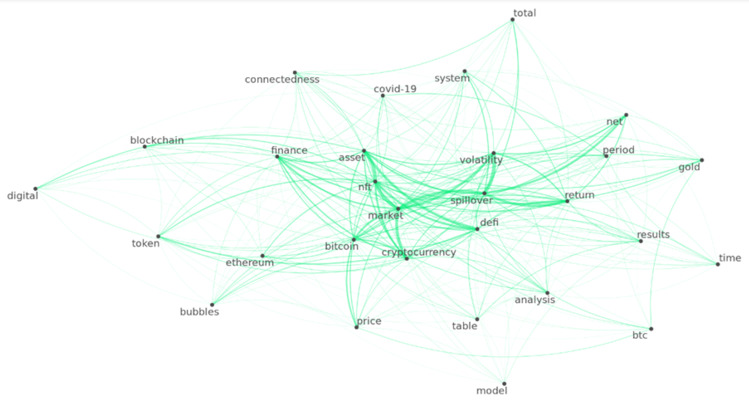
To visualize the market reaction, the chart below shows the immediate volatility in the broader DeFi sector as the contagion spread. This spike reflects not just Stream's collapse, but the sudden repricing of risk across the entire ecosystem.
Consolidating and Liquidating Assets
After the initial shock of the $93 million loss, Stream Finance shifted from crisis management to asset recovery. The protocol’s immediate priority was to freeze xUSD redemptions to prevent a total collapse, but that was only the first step in a much longer process. To mitigate further losses and attempt to return value to affected users, Stream Finance announced a strategic consolidation of its remaining holdings.
The core of the recovery plan involves a systematic liquidation of assets. As noted in their official communications, the goal is to consolidate, liquidate, and distribute assets in a way that maximizes value. This is not a simple sell-off; it is a structured wind-down of the Stream Trading Protocol’s positions. The team is working to identify the most efficient pathways to convert these holdings back into stable assets, balancing market impact against the urgency of returning funds.
To understand the scale of the remaining exposure, it is helpful to look at the broader DeFi Stream Crypto analysis context. Stream Finance had previously offered exposure to market-making opportunities and delta-neutral strategies, as tracked by DefiLlama. The liquidation process will likely involve unwinding these complex positions, which can be volatile and sensitive to market conditions. The following steps outline the typical phases of such a recovery effort in DeFi.
The protocol first halts all redemptions and withdrawals. During this window, auditors and internal teams assess the total value of remaining assets, including token holdings, liquidity pool shares, and any outstanding receivables. This creates a baseline for what can eventually be distributed.
Remaining assets are moved into a secure, multi-sig vault. This reduces operational risk and prevents further drift in value. The team identifies which assets are liquid and which require careful, phased selling to avoid slippage.
Assets are sold off gradually, often using decentralized exchanges or over-the-counter (OTC) desks to minimize market impact. The goal is to recover as much capital as possible while avoiding a fire-sale scenario that would further depress token prices.
Once assets are converted to stablecoins or other recoverable value, they are distributed to users who held xUSD or other affected tokens. This is typically a pro-rata distribution based on the final assessed value, meaning users may not recover 100% of their original investment.
The timeline for this process is often measured in months, not days. For investors in the DeFi Stream Crypto space, this phase highlights the importance of understanding the underlying asset structure of any protocol. Stream Finance’s attempt to recover value through this structured liquidation is a case study in how DeFi projects can manage failure, but it also underscores the risks inherent in complex, leveraged strategies.
As the liquidation proceeds, market participants will be watching closely. The performance of the remaining assets, particularly those tied to broader crypto markets, will determine the final recovery rate. For now, the focus remains on executing the wind-down with as much transparency and efficiency as possible.
Lessons for high-stakes DeFi strategies
The Stream Finance collapse demonstrates that delta-neutral strategies are not immune to contagion. When a protocol reports a loss of around $93 million, the resulting freeze on stablecoin redemptions can trigger a devaluation exceeding 73% in a single day. This rapid decay exposes the fragility of leveraged positions that rely on continuous market liquidity.
Investors must scrutinize the interdependencies between lending protocols and stablecoin issuers. DeFi’s composability acts as a force multiplier for risk; a $93 million loss cascaded into $285 million in total exposure because multiple platforms held correlated assets. Without strict leverage limits, a localized failure becomes a systemic crisis.
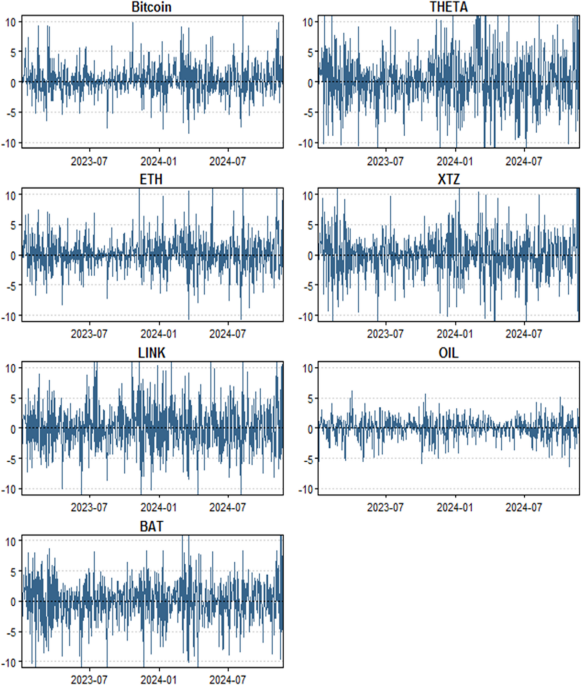
To protect capital, you should monitor protocol health using real-time data rather than relying on static valuations. The following chart illustrates the volatility patterns that often precede such events, highlighting the importance of technical analysis in risk management.
| Strategy | Risk Level | Contagion Exposure |
|---|---|---|
| Delta-Neutral | High | Severe |
| Isolated Margin | Moderate | Limited |
| Cash-Collateralized | Low | Minimal |
The table above contrasts how different risk management approaches handle systemic shocks. Isolated margin and cash-collateralized models limit the spread of losses, whereas delta-neutral strategies often require deep, interconnected liquidity that can vanish during a crisis."
What happened to Stream Finance?
On November 3, 2025, Stream Finance reported a loss of approximately $93 million. In response, the protocol froze redemptions for its stablecoin, xUSD, triggering a severe devaluation that dropped over 73% on the first day. This event was not an isolated incident but rather the catalyst for a broader contagion within the DeFi stream crypto analysis landscape.
The collapse exposed critical vulnerabilities in how liquidity was managed across interconnected protocols. As xUSD lost its peg, counterparty risk spilled over into other platforms, turning a $93 million hole into a $285 million systemic crisis. The rapid spread highlights how fragile trust remains in algorithmic stablecoin models during periods of market stress.
The incident serves as a stark reminder of the risks inherent in high-leverage DeFi strategies. As regulators and market participants scrutinize these models, the focus has shifted toward transparency and real-time risk management to prevent similar cascading failures in the future.
Helpful gear
Use these product recommendations as a starting point, then choose the size, material, and price point that fit how you actually use the gear.


As an Amazon Associate, we may earn from qualifying purchases.
No comments yet. Be the first to share your thoughts!