The Stream Finance collapse explained
Stream Finance has been thrown into crisis after revealing that an external fund manager lost around $93 million of the platform's assets. The news sent shockwaves through its ecosystem, triggering a rapid sell-off and causing its stablecoin, XUSD, to plunge by nearly 77 percent.
This event wasn't just a simple hack or a smart contract bug. According to S&P Global Ratings, Stream Finance relied on complex, sometimes opaque strategies and off-chain activities that introduced vulnerabilities. To date, DeFi risks have often stemmed from these less transparent mechanisms, where the line between legitimate yield generation and risky leverage becomes blurred.
The immediate aftermath saw XUSD de-pegging sharply, erasing billions in market capitalization across the broader DeFi sector. While the exact mechanics of the loss are still being parsed by analysts, the primary takeaway is clear: the reliance on third-party fund managers without sufficient transparency can quickly turn a stablecoin into a volatile liability.
Mapping the contagion across DeFi
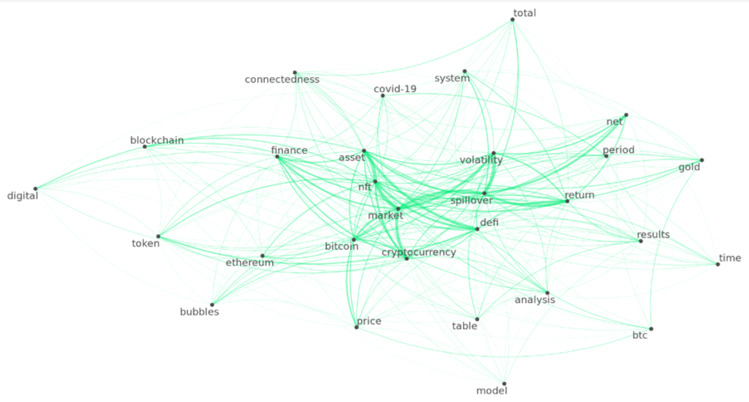
The $93 million loss at Stream Finance did not stay contained. Because Stream’s assets were rehypothecated—used as collateral to borrow against in other protocols—the shockwave rippled outward, creating a complex web of interconnected risk. Analysts have mapped roughly $285 million in potential exposure across the wider DeFi ecosystem, showing how deeply Stream’s tokens were woven into the infrastructure of other platforms.
Stream’s native tokens, xUSD, xBTC, and xETH, were not just held in vaults; they were actively deployed as collateral on lending protocols like Euler, Silo Finance, and Morpho. This means that when Stream’s value plummeted, the collateral backing loans on these other platforms suddenly became worth far less than anticipated. Lenders on these protocols now face the immediate risk of undercollateralized loans, potentially triggering cascading liquidations or insolvency if the market does not stabilize quickly. The interdependence of these protocols turned a single platform’s failure into a systemic threat.
The table below outlines the estimated exposure levels for major protocols linked to Stream Finance assets, highlighting the sheer scale of the contagion risk.
This data, sourced from on-chain analysis and reported by industry trackers, underscores the fragility of rehypothecation strategies. When one link in the chain breaks, the stress is distributed across every protocol that accepted its tokens as trustless collateral. For investors, this highlights the critical difference between holding a token and using it as financial leverage in a shared ecosystem.
The hidden costs of opacity
Stream Finance’s collapse wasn’t just a bad trade; it was a structural failure. While the protocol marketed itself as a decentralized platform offering delta-neutral strategies, a significant portion of its operations occurred off-chain. This separation created a blind spot. On-chain audits could verify the smart contracts, but they could not see the actual movement of assets or the execution of complex market-making activities that happened outside the blockchain’s public ledger.
This opacity allowed the fund manager to accumulate losses that the protocol’s internal controls failed to catch in time. When the $93 million loss was finally revealed, it did more than drain liquidity; it shattered trust. The stablecoin XUSD plunged nearly 77%, demonstrating how quickly confidence can evaporate when the infrastructure is not fully transparent.
The lesson here is clear: decentralization does not automatically mean security. If the risk management layer is hidden or relies on centralized, unverified intermediaries, the entire system remains fragile. Stream’s experience highlights the need for protocols to bring their off-chain risks into the light, ensuring that every aspect of their strategy is visible and auditable.
Tracking DeFi Exposure
The $93 million loss at Stream Finance wasn't just a hack; it was a failure of visibility. When assets are drained, the damage is often done long before the public announcement. To protect your capital, you need to know where your money is sitting and who is holding it. Relying on a single dashboard is no longer enough. You need a stack of tools that cross-reference on-chain data with official protocol reports.
Start with DeFiLlama. It is the industry standard for tracking Total Value Locked (TVL) and protocol revenue. If a protocol’s TVL drops sharply without a corresponding market-wide downturn, it is a red flag. Look for the "Yields" section to see if a project is offering unsustainable returns to attract liquidity. High yields often mask underlying risk. You can also check the "Protocols" tab to see which chains are losing the most capital. A sudden migration of funds away from a specific ecosystem often precedes a crisis.
For token-specific health, use a live price widget to monitor liquidity depth. If the STREAM token’s liquidity dries up, trading becomes impossible, and panic selling accelerates. This widget shows real-time sentiment and liquidity status, which is critical for understanding the immediate impact of any news. Do not rely on stale static prices; you need to see the live order book depth to gauge how much sell pressure the market can absorb.
Finally, verify claims against official sources like S&P Global or the protocol’s own verified announcements. Analyst maps and third-party reports can be speculative, but on-chain data is factual. If a protocol claims its assets are safe, check the wallet addresses holding those funds. If they are not in a multi-sig or time-lock contract, the risk is high. Transparency is the only defense against hidden exposure.
FAQs about the Stream Finance crisis
Helpful gear
Use these product recommendations as a starting point, then choose the size, material, and price point that fit how you actually use the gear.


As an Amazon Associate, we may earn from qualifying purchases.
No comments yet. Be the first to share your thoughts!