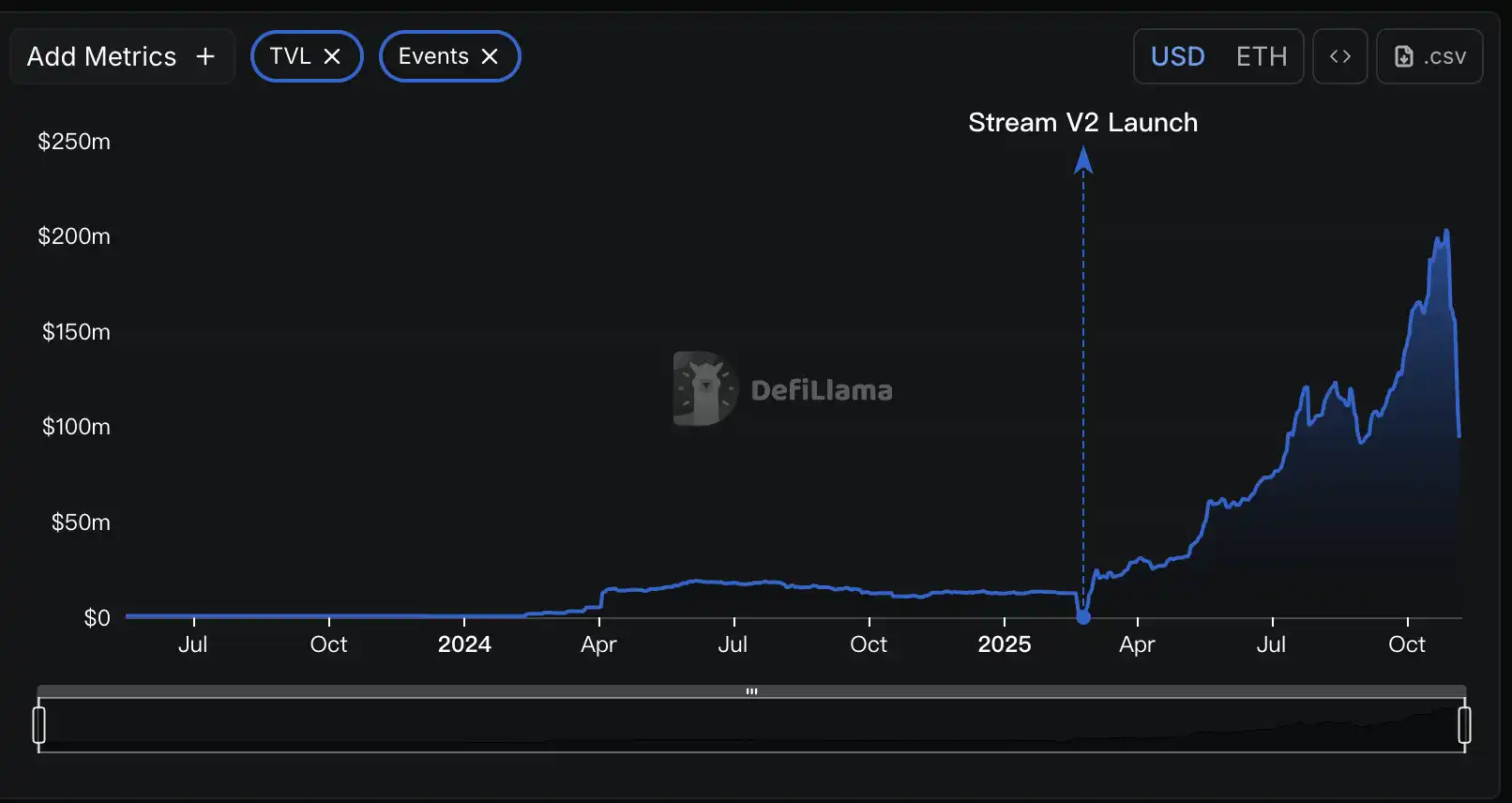
The Stream Finance contagion explained
The collapse of Stream Finance was not an isolated glitch; it was a stress test that exposed the fragility of modern DeFi infrastructure. When the stablecoin issuer lost $93 million in a single event, the damage did not stop at its own balance sheet. Instead, it triggered a $285 million ripple effect across hybrid CeDeFi protocols, demonstrating how deeply interconnected the ecosystem has become.
The core issue lay in the complexity and opacity of the strategies employed. As noted by S&P Global Ratings, Stream Finance relied on off-chain activities and intricate financial structures that introduced vulnerabilities difficult to assess in real-time. This lack of transparency meant that when the initial shock hit, other protocols relying on similar assumptions or exposed to similar risks were caught off guard.
This event serves as a critical lesson for the DeFi community. It highlights that the convenience of hybrid models does not eliminate risk; it often just shifts it to less visible corners of the infrastructure. Understanding this contagion is essential for anyone navigating the current market landscape, as it reveals the true cost of opacity in high-stakes financial engineering.
The hidden cost of bridging TradFi and DeFi
Stream Finance built its entire thesis on bridging the "liquidity moat" between traditional finance and decentralized protocols. The idea was straightforward: allow institutional capital to flow into crypto yield while maintaining the regulatory comfort of traditional banking rails. In practice, this hybrid model created a black box where traditional risk models simply could not see the cracks forming.
The problem wasn't just that the strategies were complex; it was that they were opaque. The rating agency noted in their analysis of the collapse that the firm relied on off-chain activities and intricate structures that obscured the true nature of the risk. Traditional credit models look for cash flow stability and collateral coverage. They do not look for smart contract exploits, oracle manipulation, or the sudden freezing of cross-chain bridges. When the infrastructure shook in 2026, these blind spots turned into fatal vulnerabilities.
To understand why hybrid models often fail under stress, it helps to compare the risk profiles of pure DeFi isolation versus hybrid exposure. The table below illustrates the core differences in how risk is managed, observed, and mitigated in each environment.
| Feature | Pure DeFi | Hybrid Model |
|---|---|---|
| Transparency | On-chain, public | Partially off-chain, opaque |
| Regulatory Oversight | Minimal, code-based | Heavy, but fragmented |
| Risk Detection | Real-time analytics | Delayed, manual audits |
| Liquidity Access | Instant, permissionless | Custodial, slow |
| Failure Mode | Smart contract bug | Bridge/Oracle failure |
The data shows that hybrid models introduce a new category of failure: the bridge itself. In pure DeFi, if a protocol breaks, the code is visible. In a hybrid setup, the "liquidity moat" becomes a liability. When the off-chain component fails to reconcile with the on-chain reality, the entire system can freeze. This isn't just a technical glitch; it's a structural flaw in assuming that traditional risk management can contain decentralized volatility.
Market context and technical outlook
The broader crypto market remains sensitive to infrastructure shocks. Any event that highlights the fragility of cross-chain bridges or hybrid financial models tends to trigger immediate sell-offs across correlated assets. Investors are increasingly wary of any protocol that claims to offer "regulated" DeFi yields without fully transparent mechanics.
While this chart tracks a traditional equity, the volume and RSI patterns often mirror the sentiment shifts in crypto markets during infrastructure crises. When trust in a major DeFi protocol wavers, capital flees to stability, causing volatility spikes that affect even unrelated sectors. The lesson from Stream Finance is clear: opacity is not a feature; it's a risk multiplier.
Key takeaways
- Hybrid models introduce opaque risks that traditional credit models miss.
- The "liquidity moat" between TradFi and DeFi is a liability, not an asset, when bridges fail.
- Transparency is the only true hedge against infrastructure collapse.
How news sentiment moves DeFi prices
The link between headlines and token prices in decentralized finance is not just noise; it is a measurable driver of short-term returns. Empirical analysis shows that market sentiment reacts with surprising speed, often dictating price action before fundamental metrics catch up. Understanding this correlation is essential for navigating the volatility inherent in DeFi markets.
Research indicates a direct statistical relationship between news-media sentiment and DeFi coin performance. A one standard deviation increase in positive news sentiment is associated with a 0.36% increase in DeFi coin returns on the same day. This immediate impact highlights how quickly contagion spreads through the sector, where fear or excitement in one protocol can ripple across the entire ecosystem within hours.
The DeFi sector had a potential $8 billion risk, but only $100 million has exploded so far? | PANews
This sensitivity means that price movements are often decoupled from on-chain utility in the short term. Traders and analysts must monitor sentiment indicators alongside traditional technical analysis to anticipate sudden shifts. The data suggests that while the underlying technology provides long-term value, the daily price trajectory is heavily influenced by the narrative surrounding it.
The correlation is strongest during periods of high market stress. When uncertainty rises, sentiment becomes the primary variable driving liquidity flows. This dynamic underscores the importance of real-time sentiment tracking for anyone involved in DeFi trading or investment strategies.
The broader RWA infrastructure gap
The collapse of Stream exposed a fragile assumption at the heart of the real-world asset (RWA) boom: that digital tokenization can replicate the reliability of traditional financial plumbing. Investors have poured billions into tokenized treasuries, real estate, and supply chain finance, betting that blockchain rails would offer faster settlement and greater transparency than legacy banking systems. Stream’s failure suggests that speed without robust infrastructure integrity creates systemic risk rather than efficiency.
This isn’t just about one protocol. It’s about a sector-wide confidence crisis. When high-yield, tokenized assets rely on continuous, unbroken data streams to verify collateral value or payment flows, any disruption in that stream threatens the entire valuation model. The 2026 infrastructure shakeup is forcing a hard look at what “decentralized” actually means when the underlying data feeds are centralized, opaque, or prone to single points of failure.
The market is beginning to price in this reality. Capital is flowing away from pure yield-chasing RWA protocols toward those with audited, redundant infrastructure layers. The lesson for investors is clear: tokenization is not a substitute for sound financial engineering. Without rigorous stress-testing of the data infrastructure itself, RWA projects remain vulnerable to the same shocks that plagued traditional finance—just with faster transmission speeds.
Regulatory oversight and future resilience
The collapse of Stream Finance has shifted the conversation from theoretical risk to immediate regulatory action. Official bodies are no longer treating decentralized finance as a wild west; they are mapping its infrastructure vulnerabilities with the same scrutiny applied to traditional banking. S&P Global Ratings recently highlighted that Stream’s failure was not just a market event, but a structural one, driven by opaque off-chain activities and complex strategies that lacked transparency. This shift signals that regulators will soon demand the same level of auditability from DeFi protocols that traditional finance has enjoyed for decades.
Congress is also moving to define the boundaries of this space. Recent reports from the Congressional Research Service emphasize that while the building blocks of DeFi—smart contracts and cryptocurrencies—are innovative, they operate in a regulatory gray area that is rapidly closing. The focus is no longer on banning these technologies, but on integrating them into a framework that prevents systemic contagion. For investors, this means that protocols without clear governance and transparent reserve accounting are facing an existential threat.
Long-term resilience in DeFi will depend on how well these protocols adapt to increased oversight. The era of "move fast and break things" is ending; the new standard is "move carefully and prove it." Protocols that proactively adopt institutional-grade reporting and align with emerging regulatory guidelines will be the ones that survive the shakeup. Those that rely on obscurity will likely face the same fate as Stream.
No comments yet. Be the first to share your thoughts!