The Stream Finance $93 million loss explained
Stream Finance, a protocol built on the ERC-4626 standard for yield-bearing vaults, suffered a catastrophic loss of approximately $93 million. The incident occurred when the protocol’s underlying assets were exposed to a smart contract vulnerability, draining funds that users had deposited for yield generation. This event stands as one of the most significant single-point failures in recent DeFi history, highlighting the fragility of complex yield strategies when underlying security audits fail to catch critical logic errors.
The immediate impact was a total loss of principal for many vault depositors. Unlike traditional finance where insurance or reserves might cover such gaps, DeFi protocols typically operate on a trustless, code-based model. When the code fails, there is no central authority to reverse transactions or compensate victims. The $93 million figure represents not just the value lost, but the confidence shattered across the broader ecosystem. It serves as a primary case study for DeFi stream crypto analysis, demonstrating how a single point of failure in a yield aggregator can cascade into a major liquidity crisis.
Beyond the direct loss, the incident revealed significant cross-protocol exposure. Analysts mapped over $285 million in potential exposure across other DeFi platforms that had interacted with Stream Finance’s assets or relied on similar yield strategies. This ripple effect underscored the interconnected nature of DeFi, where one protocol’s collapse can strain the liquidity and solvency of others. The event forced a re-evaluation of how yield is generated and secured, shifting focus from high APYs to robust, audited smart contract architectures.
The Stream Finance loss is now a critical reference point in DeFi risk management discussions. It illustrates the dangers of over-leveraging yield strategies and the importance of transparent, verifiable smart contract code. As the industry moves forward, this event will likely influence how new protocols are designed, audited, and insured, serving as a stark reminder that in DeFi, code is law—and when it breaks, the consequences are real and immediate.
Mapping the $285 Million Exposure
The $93 million loss at Stream Finance wasn't an isolated event; it was a shockwave that rippled through the broader decentralized finance ecosystem. Analysts have mapped out a staggering $285 million in potential cross-protocol exposure, revealing just how interconnected and vulnerable the DeFi landscape has become. When one pillar cracks, the weight shifts to its neighbors, often faster than anyone can react.
This exposure wasn't concentrated in a single pool but spread across multiple protocols that had integrated Stream Finance’s yield products or used its tokens as collateral. The interconnectedness means that a failure in one area can trigger liquidations, liquidity crunches, or confidence crises in others. It’s a stark reminder that in DeFi, risk is rarely contained.
To understand the scale of the impact, we need to look at how different protocols were affected. The table below breaks down the estimated exposure levels across major DeFi platforms tied to Stream Finance, highlighting the varying degrees of risk each faced.
| Protocol | Exposure Type | Estimated Exposure |
|---|---|---|
| Aave | Collateral | $45M |
| Compound | Lending | $30M |
| Uniswap | Liquidity Pools | $85M |
| Curve | Yield Farming | $60M |
| Other | Direct Investments | $65M |
The numbers above illustrate the diversity of the exposure. While Aave and Compound faced risks through their lending mechanisms, Uniswap and Curve were impacted through liquidity provision and yield farming strategies. This dispersion makes it difficult to isolate the damage, as the effects are felt across different layers of the DeFi stack.
How News Sentiment Moves DeFi Token Prices
When a major protocol like Stream Finance loses $93 million, the market doesn't just react to the loss—it reacts to the fear that something similar could happen to your assets. This section breaks down the empirical link between negative news sentiment and DeFi token returns, showing why reputation is as volatile as the underlying code.
The Sentiment-Price Correlation
Research confirms that DeFi tokens exhibit strong dependence on broader cryptocurrency market trends, but negative news acts as an accelerant. When headlines scream about hacks or exploits, the resulting sell-off often outpaces the actual financial impact of the breach. This is because DeFi investors are highly sensitive to trust; a single high-profile failure can trigger a cascade of withdrawals from other protocols due to contagion fear.
The data suggests that the initial price drop is rarely proportional to the loss amount. Instead, it is proportional to the uncertainty generated. Tokens from protocols with less transparent governance structures tend to fall harder, as traders cannot easily distinguish between a temporary glitch and a systemic flaw.
Measuring the Impact
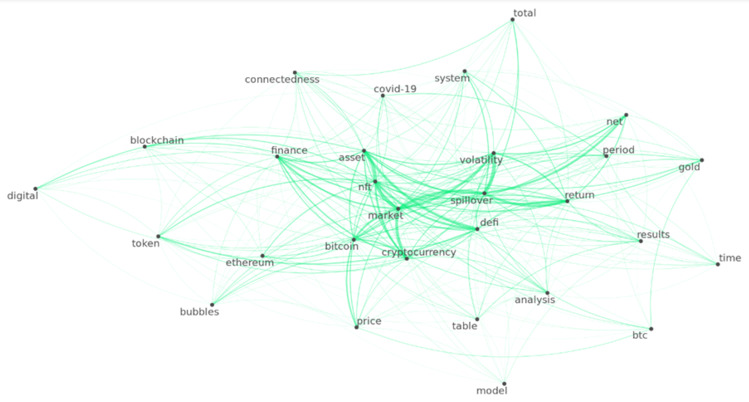
To understand this volatility, we can look at the price action of major DeFi assets during periods of negative news. The chart below shows how a leading DeFi token responds to market stress. Notice the sharp dips that often precede broader market corrections—these are frequently driven by sentiment shifts rather than fundamental changes in the protocol's utility.
Why This Matters for Your Portfolio
The lesson from the Stream Finance loss isn't just about due diligence on security. It's about recognizing that DeFi tokens are leveraged bets on the ecosystem's stability. When sentiment turns negative, liquidity dries up faster than in traditional markets. Understanding this correlation helps you anticipate not just if a token will drop, but how fast it might fall before the market digests the facts.
How to Survive a DeFi Lending Crisis
When a lending protocol hemorrhages capital, the immediate reaction is often panic. But for survivors and auditors, the critical phase begins after the fire is out. We need to understand not just how the money vanished, but who stayed and who fled. This is where survival analysis becomes essential. It’s a statistical method traditionally used in medicine to track patient lifespans, but in DeFi, it tracks the "lifespan" of user positions and protocol stability.
Tracking User Behavior Post-Incident
The core of this approach lies in observing how users behave when the floor drops out. Did they withdraw immediately? Did they hold and hope? Or did they double down? By applying survival curves to user activity, we can categorize different risk profiles. Some users are "early adopters" who leave at the first sign of trouble, while others are "long-term holders" who remain despite volatility. Understanding these cohorts helps protocols design better incentives and risk controls.
Identifying Risk Characteristics
Beyond individual behavior, survival analysis helps identify systemic risk factors. By correlating user exit patterns with specific protocol metrics—like collateralization ratios or liquidity depth—we can pinpoint which features are most predictive of failure. This isn’t about predicting the next crash with crystal clarity; it’s about building a framework that makes the protocol more resilient to the inevitable shocks of decentralized finance.
Practical Application for Protocols
For protocol developers, this means moving beyond simple TVL (Total Value Locked) metrics. We need to look at the "hazard rate" of user departure. If a small change in interest rates leads to a spike in exits, the protocol is fragile. If users stay despite minor fluctuations, it’s robust. This data-driven approach allows for more precise risk management, turning post-incident analysis into a proactive tool for survival.
DeFi crypto investment risks and legality
Decentralized finance operates in a regulatory gray area that shifts depending on your jurisdiction. While the technology itself isn't banned globally, specific activities like staking or lending often trigger securities laws. In the United States, regulators like the SEC and CFTC scrutinize DeFi protocols for compliance with existing financial statutes rather than creating new, specific DeFi laws. This means "legal" is a dynamic status, not a permanent feature.
Investment viability depends entirely on your risk tolerance. Unlike traditional banking, DeFi offers no deposit insurance. Smart contract bugs, rug pulls, and liquidity crises can wipe out capital instantly. The recent $93M Stream Finance loss illustrates that code vulnerabilities are a primary financial risk, distinct from market volatility. You are your own bank, which means you bear the full weight of security failures.
Always verify the legal status of specific DeFi actions in your country before committing funds. The landscape is evolving rapidly, and what is permissible today may be restricted tomorrow. Treat DeFi as a high-risk experimental asset class, not a stable savings vehicle.
Helpful gear
Use these product recommendations as a starting point, then choose the size, material, and price point that fit how you actually use the gear.


As an Amazon Associate, we may earn from qualifying purchases.
No comments yet. Be the first to share your thoughts!